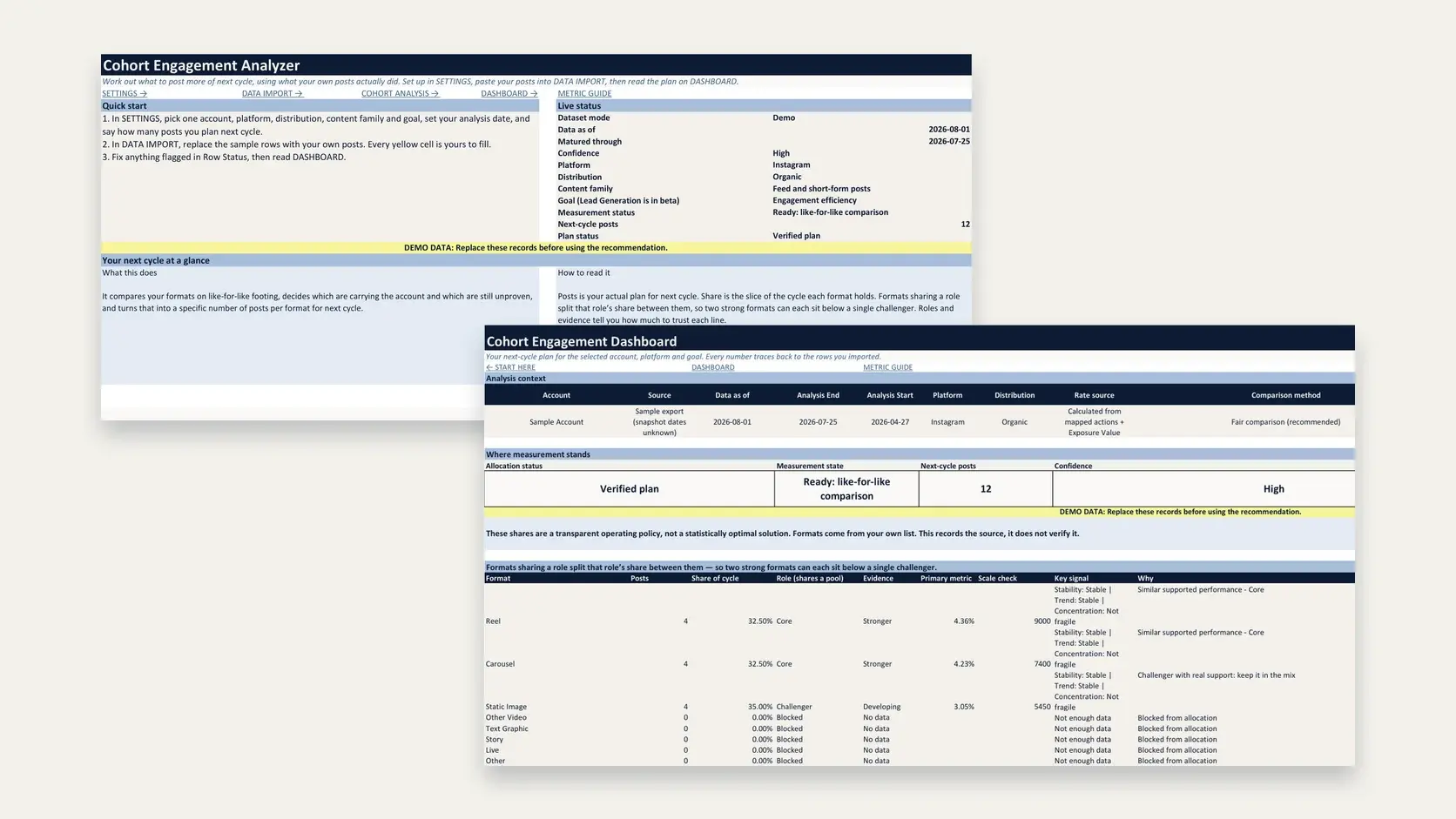
When a package says 12 posts but never says what one post is, how many rounds of changes it gets, or what happens to the ones that go unused, there’s nothing to check a client’s request against.
This template writes those answers down. Each unit gets a definition, what’s included and what isn’t, what you need from the client, and its rounds of changes. Each package says how many of each unit it includes, what one more costs, and what happens to unused ones. Then you can check any request against it.
Includes:
- Starter definitions for ten units (reels, long-form video, static posts, carousels, stories, text posts, shoot days, strategy calls, monthly reports, and community management, each with what counts as one, written for you to edit)
- Six rules for every unit (when a unit counts as used, what one round of changes is, whether changes after approval are a new request, and what happens when feedback or materials arrive late)
- Up to three packages (the fee, how many of each unit, the price of one more, and what happens to unused ones)
- Checks on every package (an extra priced below what the same unit is worth inside the package, unused units that can pile up with no limit, and the most hours a package can ask of you in one month)
- A Request Check (pick the package and the request, and it says whether it’s covered, an extra and what it costs, or something to quote, with a sentence you can send. It opens on a worked example, which goes away once you set up a package of your own.)
- A Client Sheet (a “what’s included” page for any package, ready to print or attach to a proposal)
It doesn’t suggest prices or compare yours with anyone else’s, so every number in it is yours. Your hours stay in the file and never appear on the Client Sheet. The Request Check says what your package says, and whether to bill an extra, include it free, fit it in, or turn it down is still your call.